Your Weekend Bike Is Better Than the Catalogue Says
Every season, the cycling world gets a fresh catalogue. There is always a lighter wheelset, a stiffer crank, a gravel bike with a new acronym and a jacket that promises to solve weather. It is very easy to look at your own bike, sitting there with its slightly scuffed paint and familiar squeak, and decide it is the problem.
Here is the unfashionable truth: for most UK weekend riders, it probably is not. Your bike is likely already good enough. That is not a knock on nice kit. It is a plea to spend your money where it actually changes the ride.
The seasonal itch
The upgrade urge tends to arrive in autumn, when the nights draw in and the bike press starts talking about next season. It gets louder in spring, when everyone else appears to have new bar tape and a power meter. Before long you are reading about marginal gains and wondering whether your bottom bracket is costing you watts.
For everyday riders on ordinary budgets, this is backwards. The biggest gains are not in the catalogue. They are in the fit, the maintenance, the tyres and the route. None of those require a finance plan.
Fit first, spend later
A bike that fits properly feels faster, climbs better and hurts less. Before you buy anything, check your saddle height, reach and bar position. Are your knees tracking comfortably? Can you ride in the drops without craning your neck? Are your cleats in the right place, or are your feet numb after twenty miles?
Small changes can make a big difference. Moving a saddle a few millimetres, flipping a stem, adjusting brake lever reach or swapping to wider bars can transform a bike you already own. Many bike shops will do a basic fit check for a modest fee, and some will do it free if you are buying a small part. That is still cheaper than a new frameset.
Maintenance beats upgrades
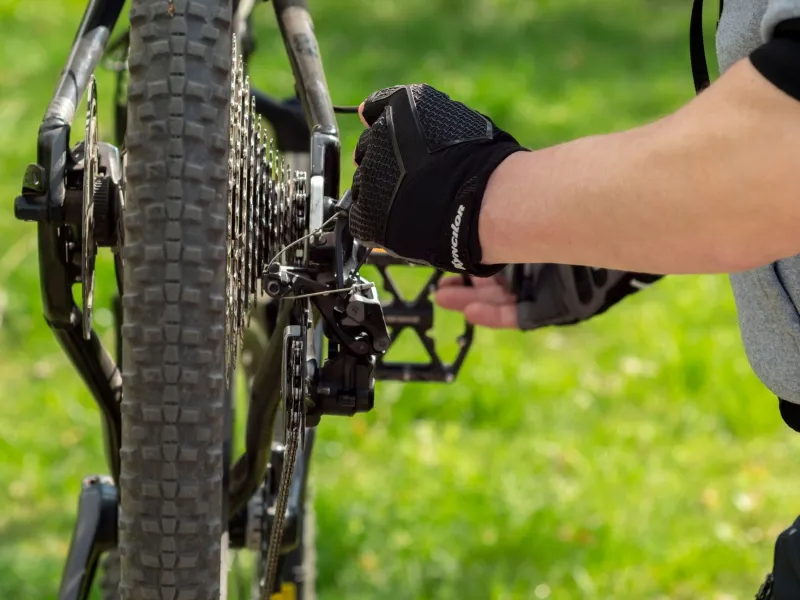
A clean, well-adjusted bike is a joy. A neglected one feels slow even if it cost four figures. Get a chain wear tool and use it. Check your brake pads before they are metal-on-metal. Look at your cables, your bearings and your bolts. Clean the drivetrain, degrease properly and re-lube with something suited to UK weather.
If your chain is worn, replace it. If your brake pads are shot, replace them. If your tyres are squared off, replace them. These are consumables, not upgrades, and they will do more for your ride than a new saddle with carbon rails. A well-maintained ordinary bike is a pleasure. A neglected expensive bike is just an expensive chore.
Tyres are the real upgrade
If you do have a bit of budget, start with tyres. They are the only contact point between you and the road, and UK lanes are not always kind. A slightly wider tyre at the right pressure can be faster, more comfortable and less puncture-prone than a narrow tyre pumped up like a stone.
Check the width your frame can take, then think about the surfaces you actually ride. If your weekend miles include canal paths, broken tarmac and farm lanes, a wider, tougher tyre makes sense. Learn to set pressure for your weight and the conditions rather than following the number on the sidewall. It costs nothing to experiment.
Route choice is free speed
A new wheelset will not fix a route that sends you down a busy A-road into a headwind. A quieter lane, a smoother surface and a better café stop will improve your day far more than saving a few grams. Spend ten minutes on a map before you ride. Look for the roads you would choose if you were on foot, not the ones a sat-nav thinks are quickest.
Group rides are the same. If the pace is miserable because the route is wrong, no amount of kit will rescue it. Pick a route that suits the riders you are with, then worry about the bike.
A sensible spending order for 2026
If you are going to spend, spend in this order: safety, comfort, reliability, then performance. Safety means brakes, tyres, lights and a helmet that fits. Comfort means fit and contact points. Reliability means a clean drivetrain and cables that work. Performance comes last, and for most weekend riders it is a small slice of the pie.
Before you buy anything, do the free checks. Set your tyre pressure properly. Clean and lube the chain. Check your saddle height. Make sure your brakes are not rubbing. Then ride your usual loop and ask whether the bike actually felt like the problem. Often it will not.
When buying is justified
There are times when a new bike or a major upgrade makes sense. If the frame is cracked, the brakes are unsafe, the bike is the wrong size, or you need an e-bike to keep riding with your group, then spend. That is not upgrade culture; that is sensible maintenance of your riding life.
But do not let a catalogue convince you that your current bike is holding you back. The bike in your shed has probably done more for your weekends than any marketing campaign ever will. Give it a fair hearing in 2026. Clean it, fit it, tyre it properly and ride it somewhere lovely. You may find the upgrade you needed was a bit of attention.