Little Laminated Legends: Why a Spoke Card Still Says Something About Your Ride
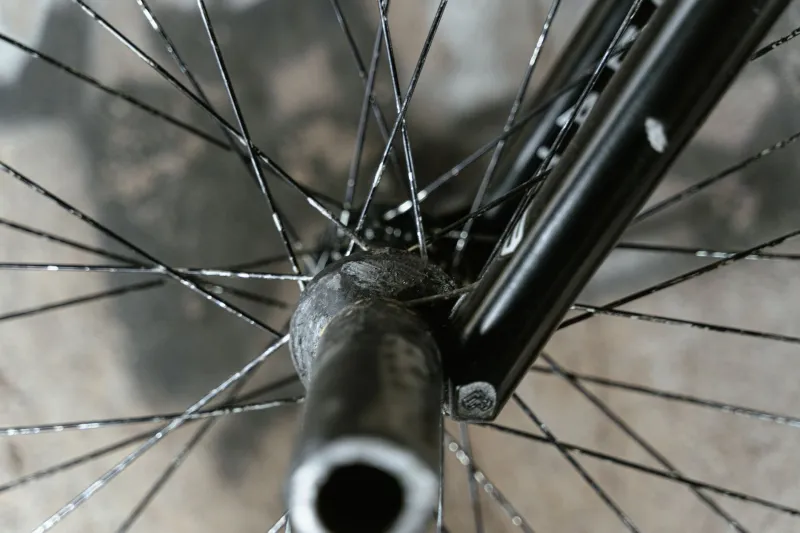
There is a particular sound a spoke card makes on a bumpy lane. It is not a expensive sound. It is not a marginal-gains sound. It is a soft, flappy clatter, somewhere between a playing card in bicycle spokes and a crisp packet caught in a hedge, and it immediately tells you something about the person riding beside you: they have bothered to make their bike a bit more theirs.
Spoke cards are one of cycling’s smallest rituals. They cost almost nothing, weigh next to nothing and do nothing for your Strava segment. Yet they survive — in club colours, in charity event mementos, in hand-drawn one-offs taped into wheels before a winter reliability ride. In a hobby that can happily sell you a £70 bar tape, that is worth paying attention to.
From playground clatter to club token
Most of us met the idea before we met the word for it. If you had a BMX in the 1980s or 1990s, you probably had a football card, a cereal packet cut-out or a piece of plastic clipped to your spokes because it made the bike sound like a motorbike. It was not a statement of identity so much as a statement of being eight years old and delighted by noise.
The modern spoke card is a cousin of that playground trick, but it has picked up a bit of lore along the way. In messenger and alleycat racing culture, cards were often printed with race numbers, route clues or small manifestos, then wedged into wheels as proof of participation and a bit of two-wheeled swagger. UK club runs have their own version: a laminated card handed out at the Boxing Day meet, a charity sportive token, a scribbled name tag for a new rider on their first bunch ride.
What makes them stick — literally and culturally — is that they are not merchandise. A club jersey is a uniform. A spoke card is a note to yourself and anyone else who looks closely. It says: I was here, I rode this, I am part of this lot.
Why the small stuff matters
Cycling culture can be brilliantly generous and slightly intimidating in equal measure. The kit is expensive, the lingo is dense, and the difference between a friendly chaingang and a thinly disguised race can be hard to spot from the outside. Spoke cards cut through all that. They are a low-stakes way to mark belonging.
They also make good mementos because they live on the bike rather than in a drawer. A medal from a charity ride goes in a box. A spoke card from the same event stays in the wheel, flapping past you on every commute, reminding you of the day you rode 60 miles in horizontal rain for a cause you believed in. That is a much better use of a small piece of card.
And there is a practical side, too. A spoke card can carry a phone number for a club, a rider’s blood group, a reminder to check brakes, or the name of the person who persuaded you to try a Sunday bunch ride. It is a tiny billboard with no algorithm and no engagement metrics.
Make your own: a mini-guide
You do not need a design studio. You need a printer, a laminator or a roll of clear sticky-backed plastic, and a bit of patience.
1. Design for the wheel, not the wall
Keep it simple. A strong shape, two or three words, maybe a small illustration. Think about how it will look when it is spinning, wet and partly obscured by mud. High contrast works. Tiny text does not. A card roughly the size of a playing card is a good starting point; anything bigger will flap like a startled pigeon on a fast descent.
If you are making club cards, put the club name on one side and a useful detail on the other — a website, a meeting point, a friendly line like “say hello to a new rider”. Avoid dates unless you want a stack of leftover cards in a shed.
2. Print on something tougher than office paper
Standard 80gsm paper will last approximately one puddle. Use 200–300gsm card stock if your printer can take it, or print on ordinary paper and laminate it. A local print shop will often run off a short batch on synthetic paper for a few pounds, which is worth it if you are making cards for a whole club.
3. Weatherproof like you mean it
Lamination is the obvious answer, but do not stop there. Punch the hole well inside the laminated edge, not right on it, or the card will tear out on the first speed bump. Run a small piece of clear tape around the hole on both sides to spread the load. If you are using sticky-backed plastic instead of a laminator, leave a decent border all round and smooth it down properly. A cable tie through the hole and around a spoke is more secure than a clip, and it will not rattle loose on a rough lane.
4. Fit it without annoying yourself
Place the card so it does not rub the fork, brake caliper or tyre. Spin the wheel slowly before you ride. If it touches anything, move it. A spoke card should be a cheerful accessory, not a mysterious clicking noise you spend three miles diagnosing.
Rituals that build a club without a budget
Spoke cards are one small ritual. They work best alongside others that ask nothing more than a bit of time.
- The café stamp card. Not a loyalty scheme for free coffee, necessarily, but a simple card the ride leader stamps or signs at the halfway café. Finish five winter rides, get your name on the club noticeboard. It is silly and it works.
- The first-timer card. Hand new riders a spoke card with the club’s meeting point and a phone number on the back. It is a welcome, a practical aid and a tiny souvenir in one.
- The charity memento. Instead of another medal, print a short run of spoke cards for your event. Riders can keep them in the wheel and the event lives on beyond the finish line.
- The birthday spoke. A hand-drawn card for a clubmate’s birthday, clipped to their wheel when they are not looking. Childish? Yes. Memorable? Absolutely.
None of this requires expensive kit. It requires a printer, a laminator and the willingness to be a bit daft in public. That is, roughly, the definition of a good club.
So next time you see a small laminated rectangle flapping in someone’s spokes, do not dismiss it as clutter. It is a tiny piece of identity, a reminder of a ride, a welcome to a newcomer or a joke between friends. It is the opposite of marginal gains, and all the better for it.