The Two-Hour Rule: Build Your Weekend Ride Around the Weather You'll Actually Get
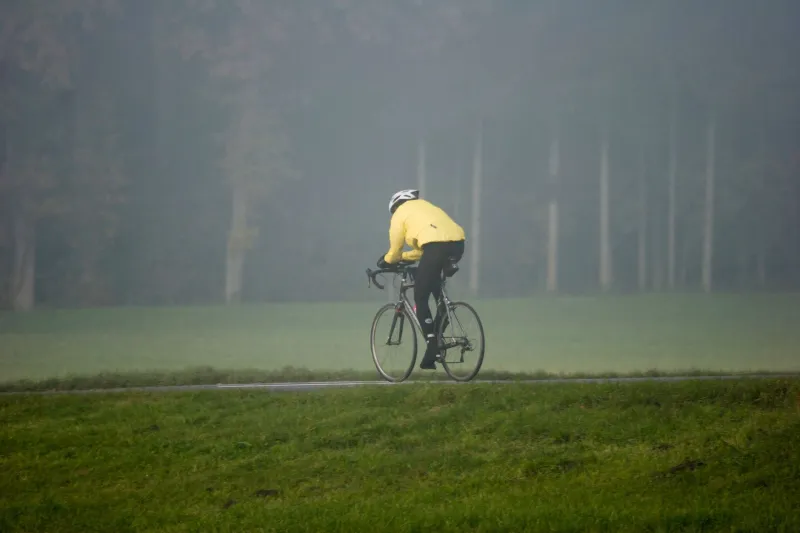
Every Friday evening, the same ritual plays out in group chats up and down the country. Someone posts a Met Office screenshot. Someone else posts a competing screenshot from a different app showing a completely different Saturday. Then a third person types the sentence that ends more rides than any storm ever has: “It's looking rubbish, let's sack it off.”
Here's the thing. A UK weekend forecast isn't a promise. It's a rumour with a percentage attached. And the gap between a written-off Saturday and four genuinely lovely hours on the bike is usually just a bit of planning, plus a willingness to be mildly damp for twenty minutes.
This isn't a piece about being hard. It's about being organised enough to enjoy yourself.
Stop reading the day, start reading the window
A forecast that says “heavy showers” across a twelve-hour period tells you almost nothing useful. A forecast that says the rain band clears by half nine and the next one arrives mid-afternoon tells you everything. That second reading is the one worth acting on.
So the first job on a Friday night is to find the longest plausible dry-ish stretch, not to judge the day as a whole. Look at three sources and treat the overlap as the truth. The Met Office's mountain and hill forecasts are excellent for upland routes and are refreshingly blunt about wind chill. Rain radar apps are far more useful than a daily icon, because you can watch a front track east and see whether it's going to clip you or miss you by fifteen miles. Coastal riders should add tide times. Anyone with a ford, a river crossing or a low-lying towpath on the route should check river levels, because a route that was dry in July can be a wading exercise in November.
Once you've found your window — say ten until two — the ride gets built inside it, not around it. That's the whole trick. You are no longer asking “is Saturday a riding day?” You're asking “what can we do between ten and two?” Those are very different questions, and the second one almost always has an answer.
Build the route backwards from the bail-out
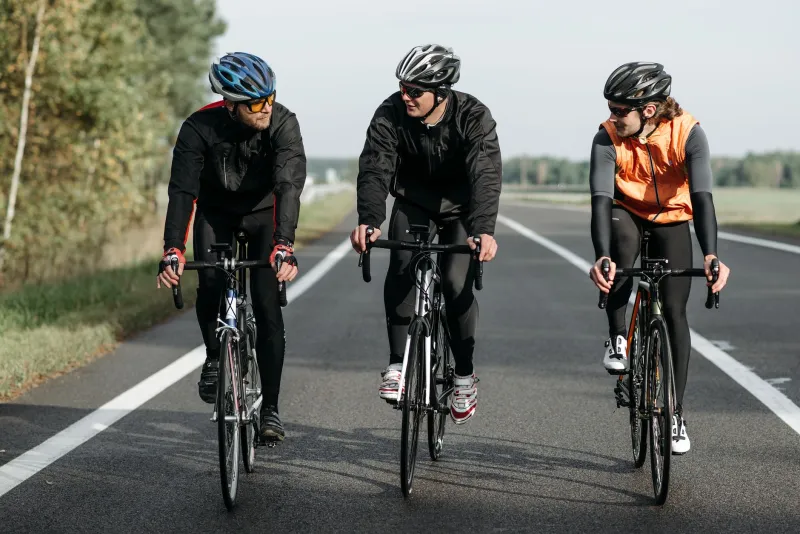
Every winter route should have an escape hatch, and you should know where it is before you clip in. The easiest way to do this is to plan a figure-of-eight rather than a loop. Both halves pass the same café, the same station or the same car park, so you can cut the second half without retracing forty miles of headwind.
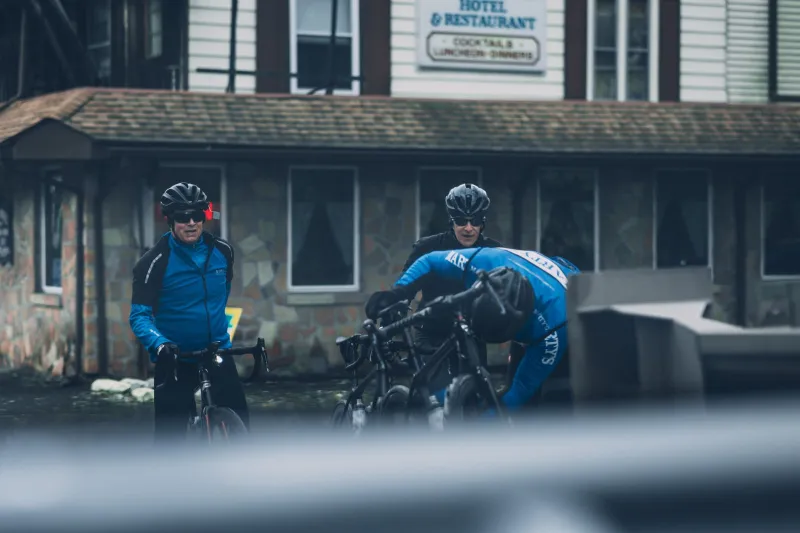
Carry two routes. One ambitious, one sensible. The ambitious one gets ridden if the window holds. The sensible one gets ridden without any sense of defeat if the sky turns the colour of a wet slate. Nobody has ever regretted a shorter ride in foul weather; plenty of people have regretted pushing on because the plan said so.
Direction matters as much as distance. A loop ridden clockwise into a south-westerly is a completely different ride from the same loop ridden anticlockwise with it behind you. If the wind is up, take the exposed section early while everyone's fresh and let the tailwind bring you home. And if a section of your route is famously grim in wind — an estuary path, an old airfield, a moorland crossing — check whether there's a sheltered alternative before you need it.
Dress for the wet hour, not the wet day
The single most common packing error is over-dressing for the forecast's worst-case scenario. If you put on the heaviest shell you own at 8am because the radar shows a downpour at 3pm, you'll boil for six hours and arrive cross.
Pack layers you can actually change. A thin packable shell that lives in a jersey pocket is worth more than a bombproof jacket that's too warm to wear. Waterproof overshoes and a cap with a peak do more for your mood per gram than almost anything else. Mudguards, meanwhile, aren't a personal choice — they're a courtesy. The person on your wheel is the one who pays for your bare bike, and they'll remember it.
Take spare gloves in a dry bag. Wet hands are the difference between a ride that's fun and a ride that's merely endured, and it costs you almost nothing to carry a second pair. If you run lights, charge them on Friday, not on Saturday morning while you're hunting for a missing shoe.
Somebody has to referee the group chat
Group rides die of consensus. Eight people all waiting for someone else to make the call means the call never gets made, or gets made badly at 11pm.
So appoint a decision-maker — the person who knows the route, usually — and agree a cut-off time. Eight o'clock Friday, decision posted, no renegotiation. Name two meeting points and two times: one early, one later, so nobody has to sprint to make the start. And say out loud, in writing, that anyone can turn back at the café with no commentary and no teasing. The moment people feel they'd be letting the group down by bailing, they stop turning up at all.
The ride you'll remember
The rides people talk about in February aren't the ones with the flattest forecast. They're the ones where the rain came in sideways for twenty minutes, someone produced a flask, and everybody got home grinning. Weather isn't the enemy of the weekend ride. Inflexibility is.
Find your window, carry two routes, pack for the hour rather than the day, and make the call before bedtime. Then go and get a bit wet. It's only water, and the café will be quiet.