Second Chances on the Workstand: A Saturday Among the Volunteers Rescuing Weekend Bikes
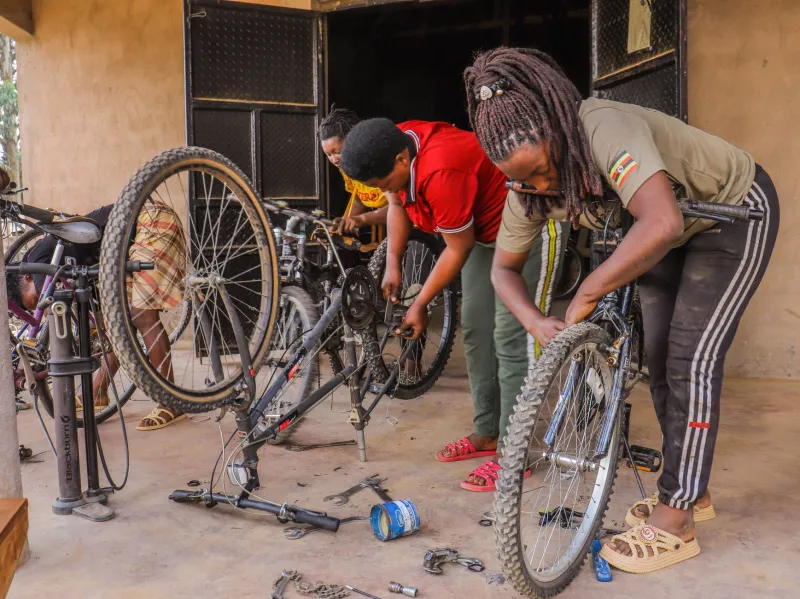
On a grey Saturday morning, the church hall smells of instant coffee, chain oil and slightly damp waterproofs. A trestle table by the door holds a urn, a tin of biscuits and a clipboard. Beyond it, six bikes are propped against walls, saddles turned backwards or notes taped to top tubes: rear brake rubbing, gears skipping, been in the shed since 2019.
This is a repair café — not a bike shop, not a charity bike giveaway, and definitely not a place where someone will tut at you for not cleaning your chain. It is a volunteer-run session where you bring your bike, stay with it, and learn what is wrong and what can be done. Across the UK, these mornings happen in church halls, community centres, canal-side containers, libraries and scout huts. Some are monthly. Some are quarterly. All of them run on the same basic idea: a few people who know their way around a workstand, a box of spare parts, and an hour or two of patience.
The triage table
The first job is not repair. It is triage. A volunteer gives the bike a slow walk around, squeezing tyres, spinning wheels, testing brakes and peering at the chain. Sometimes the answer is a five-minute fix. Sometimes it is a gentle conversation about money.
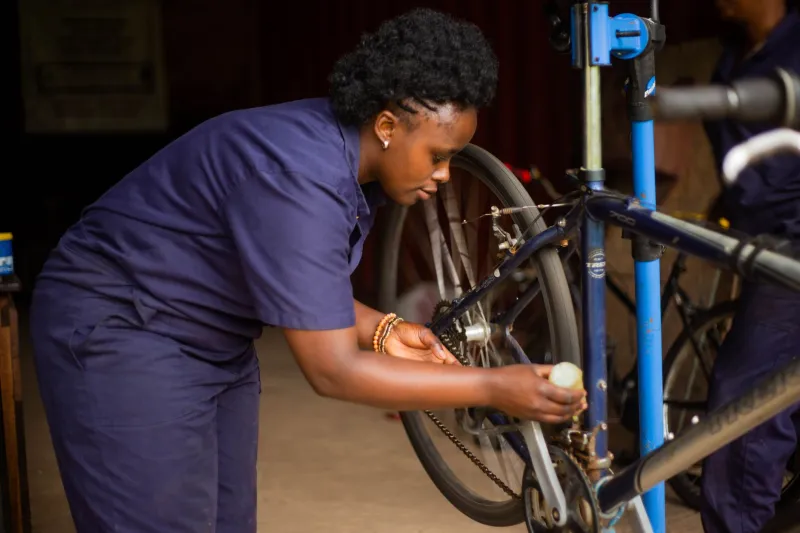
One rider has brought a hybrid that has done years of towpath miles. The rear wheel wobbles, the brake pads are down to the metal, and the gear cable is frayed. The volunteer does not sigh. He puts it in the stand and starts at the back: wheel out, quick check of the rim, new pads from a ice-cream tub of donated parts. The owner watches, holds the Allen keys, and asks whether the wobble means a new wheel. Not necessarily, he is told. A truing stand and ten minutes might sort it. If the rim is worn, that is a different chat.
Another bike is declared beyond saving. A cracked frame near the bottom bracket, and rust so advanced that the seatpost has become part of the scenery. The owner looks deflated. The volunteer explains the risk clearly, then points them towards a local bike co-op that sells refurbished machines and a council scheme that might help with costs. Nobody pretends a dangerous frame can be fixed with enthusiasm and cable ties. That honesty is part of the service.
What gets fixed — and what doesn't
The most common jobs are beautifully ordinary. Punctures. Brake pads. Gear indexing. A chain that has never been lubed. A headset that has worked loose. A seatpost that has seized because someone left it alone for three winters. These are the repairs that keep a weekend bike useful without turning a cheap commute into a false economy.
What gets refused tends to be structural or uneconomic: cracked frames, forks with crash damage, rims worn concave, bottom brackets that have welded themselves into the shell. Volunteers are also careful about hydraulic brakes and electronic gears. Some will bleed a brake; others will not. Ask before you assume.
A good repair café will tell you what it cannot do. That is not a failure. It is the difference between a friendly helping hand and a dangerous shortcut.
The bit nobody expects: learning
Some workshops insist you stay with your bike. At first this can feel like being watched while you fail a test. In practice, it is the best part. You see where the barrel adjuster is. You learn how a brake pad should sit against the rim. You find out that the horrible creak is not the bottom bracket but a dry seatpost clamp.
By the time the kettle goes on for the second round, the atmosphere has shifted. Someone is showing a teenager how to use a chain tool. Another rider is practising a puncture repair on an old inner tube before doing it for real. A volunteer is explaining why the tyre pressure printed on the sidewall is a maximum, not a target. The bike is not just being repaired. Its owner is being given a small amount of independence.
Finding a session and turning up prepared
Start with a search for “repair café” plus your town, then try local cycling Facebook groups, library noticeboards, council Dr Bike listings and bike co-ops. Some sessions are advertised as bike kitchens or fix-it clinics rather than repair cafés. Check whether you need to book, whether there is a queue, and whether they charge for parts.
Bring the bike, obviously. If you can ride it there, do. Bring a lock so you can leave it while you fill in a form, and a note of the symptoms in plain English: when it happens, what it sounds like, what you have already tried. If you have a spare inner tube that fits, bring it. Bring patience, because the most experienced volunteer is often surrounded by three people asking questions. And bring a couple of pounds for the biscuit tin if you can — these sessions are usually free, but parts and tea do not appear by magic.
Five small fixes worth learning before your next ride
You do not need a full workshop to make your weekend bike less mysterious. Learn to check and inflate your tyres properly. Learn how to clean and lube a chain without drowning it. Learn how to check brake pads for wear and replace them. Learn which way a barrel adjuster turns when gears skip. Learn how to check that your quick-release or thru-axle is properly closed before you set off.
None of these will make you a mechanic. They will make you a rider who notices things earlier, which is most of the battle.
Why a borrowed workstand matters
A repair café is not a substitute for a good local bike shop. It is a different kind of place: slower, chattier, and built around the idea that everyday bikes are worth keeping going. That matters in a country where plenty of perfectly useful machines are abandoned because a repair feels too expensive or too complicated.
By the time the hall is being packed away, the hybrid is rolling again. The owner is grinning, slightly oily, and has already asked when the next session is. They will be back — not because the bike is broken, but because they now know how to keep it from becoming so.