Steal the Sun: Building a 45-Minute Midday Loop That Keeps Your Winter Legs Turning
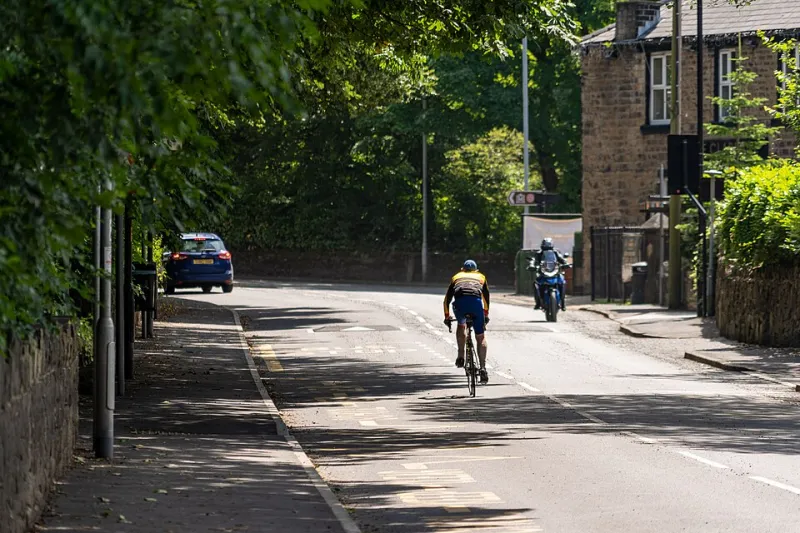
Photo: Alextredz, CC BY-SA 4.0, via Wikimedia Commons
There's a moment in mid-November when the penny drops. You finish work, glance out of the window, and it's already that bruised blue colour that means the light has packed up for the day. By the second week of the month the sun is setting just before four o'clock across much of England, closer to half three further north, and it won't start behaving properly again until February.
So the obvious conclusion is that the bike goes into hibernation, apart from the odd grim Saturday. Except that's not quite true. The daylight hasn't vanished. It's just moved. It now sits, roughly undisturbed, between about eleven and two, and that window happens to land right on top of the one hour a day when nobody expects you to be at your desk.
That's the whole idea here. Not a heroic training plan, not a turbo session in a garage at nine at night. Just a small, repeatable loop in the middle of the day that keeps your legs from going slack and your head from going funny between now and Christmas.
Why midday is the best-kept window in the winter week
A few things work in your favour at lunchtime in a way they simply don't at seven in the morning.
The air temperature typically peaks somewhere around one or two in the afternoon, and while that's not exactly the Algarve in December, it's often two or three degrees warmer than dawn. The sun is at its highest, which means the road surface is more likely to have dried out, and any frost or black ice that formed overnight has usually had a chance to shift. Gritters have often been out, and the worst of the standing water has drained.
Traffic behaves differently too. The school run and the office rush are both somewhere else. On residential streets and park paths, you'll often have the place more or less to yourself.
And there's the mood question, which is not a small thing. A short ride in daylight does something for a grey November week that no amount of desk-side lamp can replicate. It's the same reason people go for a walk at lunch; it's just faster and more fun.
Choose a loop you could ride half asleep
The temptation is to plan something ambitious the first time and then quietly abandon it. Resist that. The loop that survives the winter is the one that requires almost no decisions.
Work on a radius of three to four miles from your door. That's a 30 to 45 minute ride at a sociable pace, plenty to get the blood moving, not so long that you're watching the clock. If you're at home, you have the luxury of starting from your own hallway. If you're at the office, it's worth spending twenty minutes on Google Maps at some point this week working out which streets actually connect.
A few things to look for:
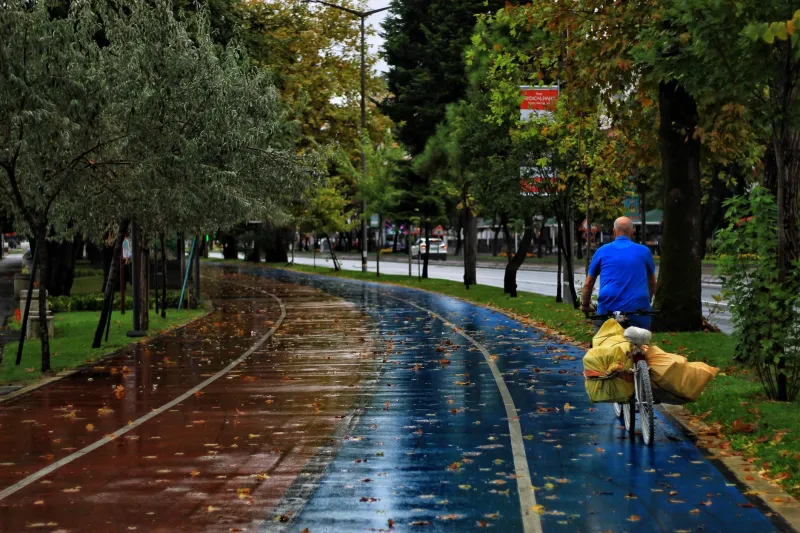
- Parks and towpaths are gold in winter, but check whether they're lit, and whether they flood. A canal path that's lovely in June can be a six-inch puddle with a bike lane drawn on it in December.
- Quiet residential grids beat A-roads every time. You want the kind of streets where a wrong turn costs you nothing.
- A figure-of-eight rather than a loop gives you an escape hatch. If the weather turns, or you're running late, you can cut the second half and still be back in time.
- Somewhere to stop briefly — a bench, a viewpoint, a café with an outside hatch — is a nice-to-have on the days you need a minute before heading back in.
If you can, ride the route once on a Sunday first, in ordinary clothes, to check for surprise one-way systems and locked gates. It sounds fussy. It saves a lot of faffing on a Tuesday afternoon.
The bag that lives under your desk
The people who manage regular lunch rides are almost never the ones with the most expensive kit. They're the ones who removed friction. The single biggest barrier is not fitness or weather, it's the moment you realise your only towel is at home and your shorts are still in the washing machine.
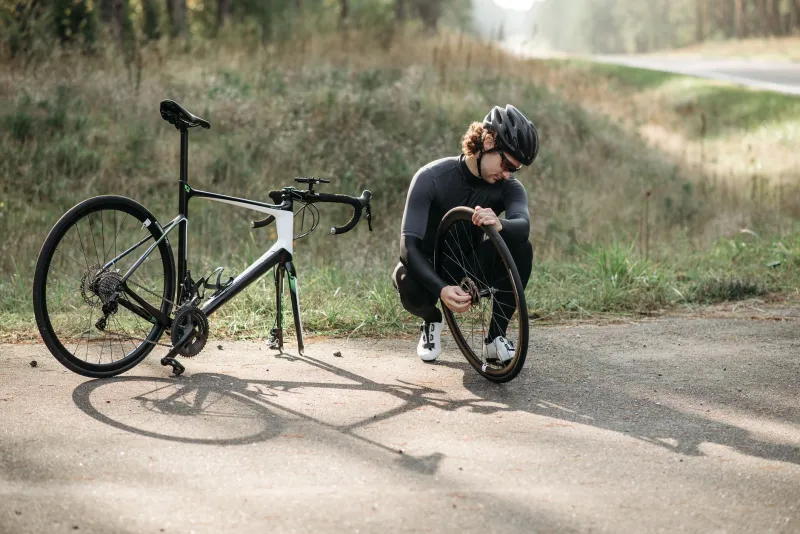
So build a small kit that stays at work, or in the car, or in a drawer by the door. Nothing glamorous:
- A pack of wipes, deodorant, a flannel and a small microfibre towel.
- Spare socks. Two pairs, if you're sensible.
- A plastic bag for anything damp.
- A spare inner tube, tyre levers and a mini pump that actually fits your valves.
- A buff and a pair of thin gloves, because the temperature will drop faster than you expect if you're out later than planned.
If your workplace has a shower, brilliant, use it. If it has a disabled-accessible cubicle with a sink and a hook, that works just as well. If it has neither, this is what the wipes are for, and nobody in an open-plan office has ever noticed a slightly flushed colleague in a clean shirt.
Dressing for a 45-minute temperature swing
Short winter rides are oddly difficult to dress for. You're cold for the first ten minutes, comfortable for the middle twenty-five, and overheating for the last ten if you've overdone it. The trick is to accept being slightly chilly at the start.
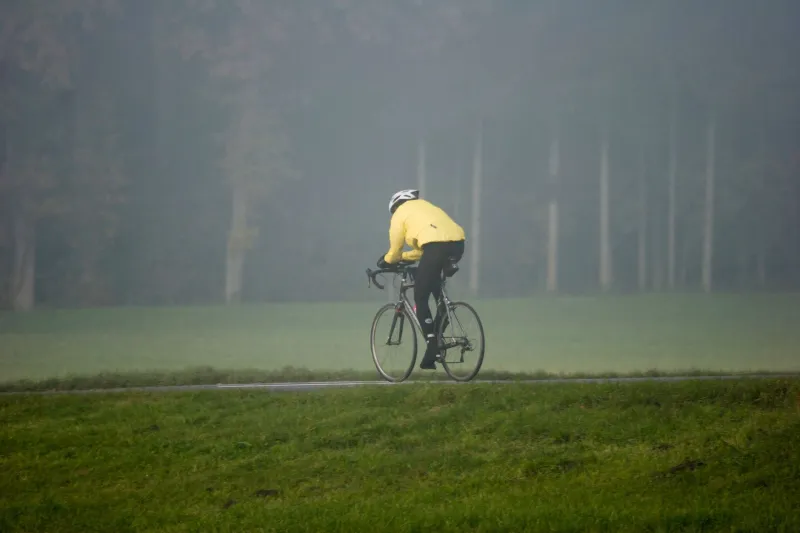
Start with a thin base layer, a long-sleeve jersey or softshell, and a packable gilet in a back pocket. Add full-finger gloves, a skull cap or thin buff under the helmet, and overshoes or warm socks. On genuinely cold days, arm warmers rather than a heavier jacket — you can push them down once you've warmed up.
Avoid anything too insulated. You're not going to be out long enough to need it, and you'll spend the whole ride fiddling with zips and regretting the decision.
Underneath, wear something you can sit at a desk in. Merino is your friend here. So is not wearing the same jersey you wore yesterday.
Be seen, even at midday
The winter sun sits low, which means glare, long shadows and drivers looking straight into it. Daylight does not excuse you from lights. A small rear light on flash is not belt-and-braces paranoia — it's just sensible in December, particularly on any stretch where you're riding into a low sun with traffic behind you.
Reflective ankle bands and a bit of high-visibility detail on your gloves are quietly effective, because they move. You don't need to look like a road sign. You just need to be obvious at junctions.
The bit that pays off on Saturdays
A few of these lunch rides a week will not turn you into a racer. What they will do is keep your legs from forgetting how to work. When you turn up to a cold, hilly club run in January, you'll notice the difference between someone who has been riding three times a week and someone who hasn't ridden since before the clocks changed.
There's also a simple psychological benefit. The winter can trick you into feeling like you've stopped being a cyclist. Twenty miles a week in short bursts quietly proves otherwise.
Making it stick
Block the time in your calendar and treat it like a meeting you can't move. Find a colleague or a mate who'll notice if you skip it. Keep the bag packed. Don't chase average speed, and don't worry about distance. The whole point of this ride is that it's short.
By the time the light comes back in February, you'll wonder why you ever wrote off the winter.