Darkness Isn’t the Enemy: A Sensible Lighting Plan for the Everyday Commute
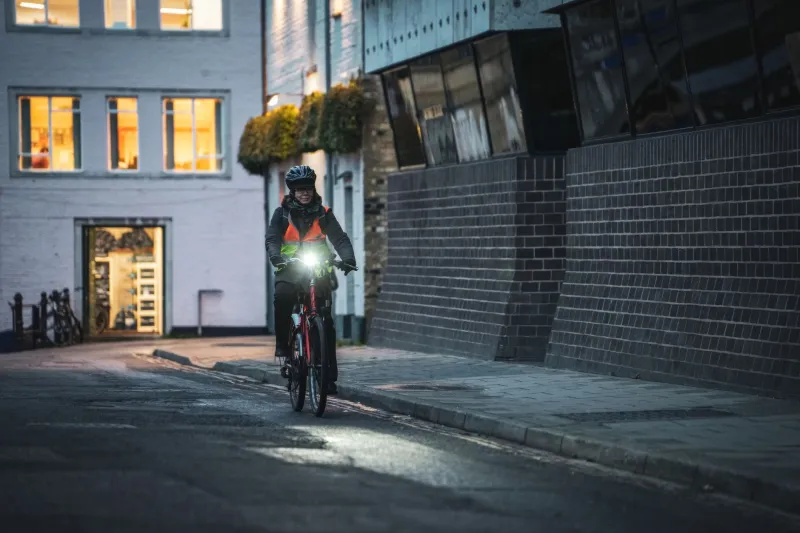
There’s a moment in early November when the working day ends and the sky has already packed up. In 2026, with the clocks changed and the evenings drawing in, that moment arrives somewhere around four o’clock for much of the UK. If your bike is still wearing the same token blinky light it had in July, this is the week to sort it.
Not with a trolley-load of gadgetry. The everyday commute doesn’t need a lighting arms race. It needs a setup you trust, one that works when you’re tired, when it’s drizzling, and when you’ve forgotten to charge something. Confidence, in other words, not gear lust.
Start with the law, then stop worrying about it
The legal side is simpler than the internet suggests. After dark, a bicycle needs a white front lamp and a red rear lamp, a red rear reflector, and amber pedal reflectors. Flashing lights are allowed as long as they flash between one and four times per second. There is no legal minimum lumen figure — the law is concerned with presence and conspicuity, not with whether you can illuminate a postcode from a mile away.
That’s worth repeating: you do not need a 2,000-lumen off-road beam to commute through town. You need lights that are charged, mounted where they can be seen, and angled so they help you see without dazzling everyone coming the other way. A decent front light for seeing the road ahead, plus a steady or gently flashing rear, covers most urban and suburban riding. Keep a spare set of small backup lights in your bag and the legal box is ticked even if your main battery dies.
Pedal reflectors are the humble bit everyone forgets. If your bike has them, keep them. If it doesn’t, reflective ankle bands or clips do a similar job of catching headlights and adding movement to your silhouette. A red rear reflector is not optional either, and many rear lights now incorporate one. Check yours actually reflects, rather than just looking red in daylight.
The visibility upgrades that earn their keep
The best winter lighting upgrades are boring in the nicest way. They’re the ones you notice because they keep working. A front light with a shaped beam is more useful than a naked blast of lumens: it puts light on the road without spraying it into the eyes of drivers, cyclists and pedestrians. USB-C charging is a small mercy in a house full of cables. A mount that doesn’t wobble over British patchwork tarmac is worth more than an extra mode you’ll never use.
On the rear, think steadiness and side visibility. A light with a wide spread helps at junctions, where most close calls happen. Reflective details on your bag, shoes or jacket do more than most people realise because they catch headlights at odd angles. Reflective tyres or rim tape are quietly effective too, especially from the side.
Mudguards deserve a mention here, not because they make you visible but because they make the ride calmer. Dry feet and a dry back change your mood on a dark evening. A bike that feels cared for is easier to trust. If you’re riding an everyday bike through winter, full-length guards with a decent flap are one of the least glamorous, most useful upgrades going.
Reflective without the hi-vis uniform
There’s a persistent idea that winter commuting means dressing like a roadworks sign. It doesn’t. High-visibility yellow is effective in some conditions, but it isn’t a magic cloak, and it isn’t the only option. What matters is contrast and movement: something bright or reflective that breaks up your outline and catches a driver’s attention.
A dark jacket with reflective piping, a bag with a reflective panel, gloves with a reflective strip, or ankle bands that move as you pedal can all do the job. So can a light-coloured jacket in a colour you actually like. The point is to avoid being a silent dark shape against dark tarmac, not to win a visibility contest.
Comfort matters as much as colour. If you’re cold, wet or miserable, you ride worse. A windproof layer, gloves you can still brake in, and shoes that keep the worst of the road spray out will do more for your safety than an extra strip of silver tape. Wear what you’ll actually put on at the end of a long day.
Choose the calmer way home
Route choice is the underrated lighting upgrade. The fastest way home in daylight is not always the best way home in the dark. A slightly longer route on quieter streets, a cycle path that avoids a fast roundabout, or a road with fewer parked cars and better street lighting can transform the feel of a winter commute.
Try a reconnaissance ride at the weekend, in daylight or early evening, to see where the street lights actually are and where the bad junctions sit. Note the roads where drivers are likely to be tired and impatient. If a route feels nervy in the dry, it will feel worse in the rain and dark. Give yourself permission to take the slower, steadier line.
It also helps to build in a buffer. Dark, wet rides take longer. Leaving five minutes earlier is a visibility strategy in its own right, because it reduces the temptation to rush junctions and filter through gaps you wouldn’t normally take.
What you can cheerfully ignore
You can ignore the pressure to buy the most powerful light on the market. You can ignore the idea that you need a full winter-specific wardrobe before you’re allowed to enjoy a dark ride. You can ignore tiny fashion lights that look lovely and barely register from twenty metres. And you can ignore anyone who tells you a commute isn’t “proper” cycling unless it involves expensive kit and a training plan.
What you can’t ignore is the basics: charged lights, a rear reflector, something reflective that moves, and a route you don’t dread. The dark-ride test isn’t about passing an exam. It’s a simple prompt: if the light went now, would you be happy riding home? If the answer is no, fix the small things first. The everyday bike doesn’t need to become a project. It just needs to get you home feeling seen, steady and reasonably dry.